The most dangerous number in a DeFi portfolio may be the one that looks the most precise. A dashboard can show a total balance down to the cent while hiding the fact that a large share of that balance depends on one bridge, one price oracle, or one lending market. In other words, portfolio tracking measures what is visible; risk assessment asks what could make that visibility misleading.
That distinction matters more today than it did in the early days of decentralized finance. DeFi portfolios now span multiple chains, automated market makers, lending protocols, liquid-staking systems, vaults, governance tokens, stablecoins, and wrapped assets. A US user may also need to reconcile taxable swaps, liquidity-provider transactions, and transfers between self-custody wallets. The result is not merely a bookkeeping problem. It is a problem of reconstructing a system of dependencies.
Two Ways to Track a DeFi Portfolio
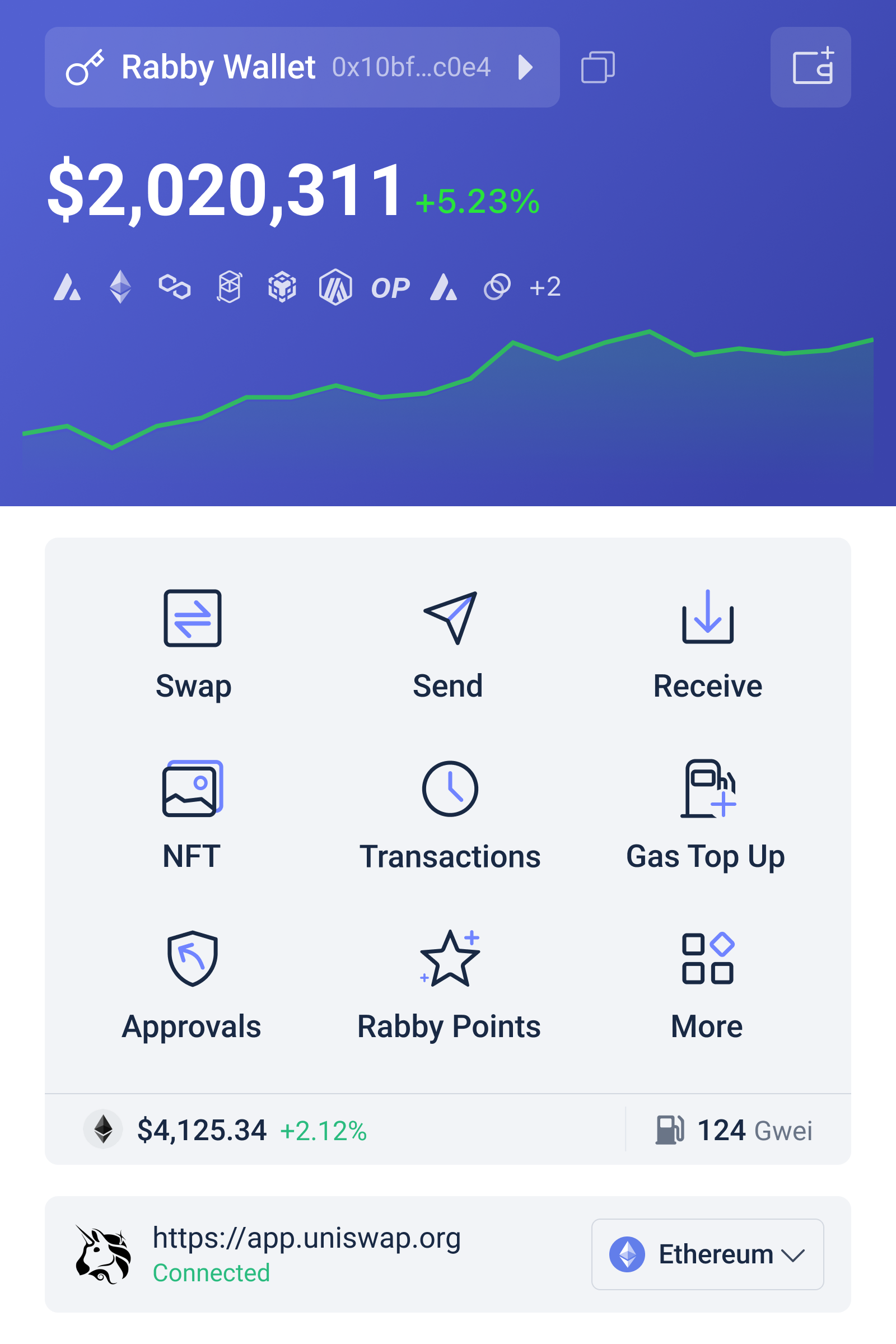
The first approach is wallet-native tracking. It begins with addresses and transaction history, then attempts to identify balances, approvals, positions, and contract interactions. This approach is close to the user’s actual activity. It can reveal that a token was received through a vault, that an approval remains active, or that an apparently simple swap involved several contracts. For day-to-day self-custody, this context is valuable because the transaction itself is often the point at which risk becomes actionable.
The second approach is an external portfolio aggregator. Aggregators generally combine wallet addresses, exchange accounts, token prices, and protocol integrations into a consolidated view. Their advantage is breadth and convenience: a user can compare several chains and positions without manually interpreting every transaction. Their weakness is abstraction. A position may appear as a clean line item even though its economic value depends on an underlying vault, a derivative token, a bridge, or a pricing model that the dashboard does not fully explain.
Neither method is universally superior. Wallet-native tools are often better for transaction-level awareness and authorization hygiene, while aggregators can be better for allocation analysis and historical performance. A spreadsheet or manual ledger remains slower but can be more transparent for a small number of high-value positions. The sensible comparison is therefore not “which tracker is best?” but “which layer of the portfolio question is each tool qualified to answer?”
What each method can and cannot tell you
A tracker can usually answer questions such as: What assets do I appear to hold? On which chain are they located? How has the marked value changed? It may also estimate returns and identify protocol positions. But those answers can be fragile. Token prices may be stale or based on thin markets. Illiquid positions may be assigned a theoretical value that could not be realized without substantial slippage. A dashboard may also double-count assets when a deposited token and its receipt token are both recognized as holdings.
This is the first important mental model: portfolio value is an observation, not a guarantee of liquidity. A position worth $50,000 on a screen does not necessarily mean that $50,000 can be withdrawn immediately. Withdrawal queues, utilization limits, paused contracts, liquidity depth, withdrawal fees, and market impact all matter. During ordinary market conditions these differences may seem academic. During a depeg or a protocol incident, they become the difference between accounting value and exit value.
From Balance Sheets to Dependency Maps
DeFi risk is better understood as a dependency map than as a list of token balances. Suppose a user holds a liquid-staking token in a lending market. The position may depend on the lending protocol’s smart contracts, the token’s redemption mechanism, the validator or staking infrastructure behind it, the oracle that reports its price, and the chain’s own availability. A portfolio tracker may display one asset. The risk surface contains several connected components.
This is why two portfolios with the same asset allocation can have very different risk. One user may hold a token directly in a wallet. Another may hold a yield-bearing representation of that token inside a leveraged strategy. The market exposure may look similar, but the second position adds smart-contract risk, liquidation risk, oracle risk, and possibly governance or keeper dependence. Tracking the asset name alone misses the mechanism that creates the exposure.
A practical risk review should separate at least four dimensions. Market risk is the possibility that asset prices move against the portfolio. Smart-contract risk concerns bugs, unexpected state transitions, upgrade authority, and failures in integrations. Liquidity risk asks whether a position can be exited at a reasonable price or within the required time. Operational risk includes compromised keys, malicious approvals, phishing, incorrect chain selection, and signing a transaction whose effects are difficult to interpret.
These risks interact rather than simply add together. A sharp price decline can reduce collateral value, trigger liquidations, and drain available liquidity at the same time. A bridge disruption can turn a supposedly diversified multi-chain portfolio into a set of isolated balances. A compromised approval can remain dormant until a later interaction. The most useful tracker is therefore not the one with the prettiest allocation chart, but the one that helps a user identify concentration and conditional failure.
Why Transaction Simulation Changes the Workflow
Transaction simulation is useful because many DeFi actions are difficult to infer from a raw transaction signature. A simulation attempts to estimate the state change before the transaction is broadcast: which tokens leave the wallet, which tokens arrive, what approvals are created, and whether the call is likely to revert. This can expose an unexpected recipient, an unlimited approval, a suspicious contract interaction, or a result that differs from the user’s intention.
Simulation is not the same as proof of safety. It is a forecast under a particular set of blockchain state assumptions. A transaction can be affected by price movement, block ordering, changing liquidity, oracle updates, or contract behavior that depends on conditions not captured perfectly by the simulation. Malicious contracts may also behave differently under analysis, and a harmless-looking outcome does not establish that the protocol itself is economically sound.
That limitation is important for advanced users. Simulation is strongest as a decision aid at the authorization boundary. It helps answer, “What is this transaction expected to do?” It is weaker at answering, “Will this protocol remain solvent or secure over the next month?” For that question, the user still needs to inspect collateral design, liquidation parameters, oracle assumptions, admin controls, upgradeability, insurance claims, and the actual liquidity supporting withdrawals.
Using rabby as part of that workflow can be valuable when its security-oriented transaction context helps connect a proposed action with the wallet’s broader position. The principle is more important than any particular interface: review the transaction before signing, then review the resulting position after confirmation. A safe-looking approval can still create future exposure, and a successful deposit can still increase concentration in a fragile protocol.
A Reusable Framework for DeFi Portfolio Review
Start with exposure, not performance. Group holdings by economic driver rather than by ticker symbol. Several different tokens may all depend on the same stablecoin, chain, bridge, oracle, or market maker. Next, identify the form of each position: direct asset, receipt token, debt position, liquidity-pool share, leveraged collateral, or governance claim. The form determines which additional failure modes have been introduced.
Then test liquidity under stress. Ask how the position would be exited if the underlying asset fell quickly, withdrawals were delayed, or one major venue stopped functioning. For liquidity-pool positions, consider impermanent loss and the depth available on both sides of the pair. For lending positions, examine liquidation thresholds and whether liquidators could realistically execute during a congested or volatile market.
Finally, inspect control and authorization. Determine whether a contract can be upgraded, who can pause it, whether a multisignature or governance process controls changes, and which approvals remain open from previous interactions. This is not an argument that centralized administration is automatically bad. Admin controls can help respond to emergencies. They also introduce governance and key-management dependencies that should be visible in the risk assessment.
For US users, a separate record of deposits, withdrawals, swaps, rewards, and transfers is prudent even when a tracker estimates tax information. Portfolio valuation and tax classification are different tasks. A token reward may be treated differently from a sale, a liquidity event, or a transfer depending on circumstances and current guidance. A dashboard can organize evidence, but it should not be treated as a final tax opinion.
What to Watch as DeFi Tracking Evolves
The next useful step for portfolio tools is likely to be dependency-aware reporting rather than simply more charts. A mature system would show that a portfolio has, for example, indirect exposure to one oracle, one bridge, or one stablecoin across several seemingly unrelated positions. It would also distinguish quoted value from estimated exit value and flag when a position’s price depends on an illiquid market.
That development is plausible, but not automatic. Dependency mapping is technically difficult because protocols compose with one another, contract identities can be obscured by intermediaries, and economic exposure does not always match token metadata. Users should therefore treat automated risk labels as prompts for investigation, not as universal scores. The most reliable process remains layered: track balances, interpret transactions, map dependencies, and challenge the assumptions behind the displayed price.
Frequently Asked Questions
Can a portfolio tracker tell me whether a DeFi protocol is safe?
No. It can improve visibility into balances, transactions, and sometimes protocol positions, but safety depends on code, governance, oracles, collateral, liquidity, and operational controls. Tracking reduces information gaps; it does not eliminate protocol risk.
Is transaction simulation enough before signing?
It is an important safeguard, especially for complex interactions, but it is not sufficient by itself. Compare the simulated result with your intended action, check the contract and approval details, consider slippage and timing, and remember that simulation reflects expected behavior under changing blockchain conditions.
What is the most common portfolio-tracking mistake in DeFi?
Confusing diversification by token or protocol name with diversification by underlying dependency. Several positions can rely on the same chain, stablecoin, oracle, bridge, or liquidity source. Mapping those shared dependencies often reveals more risk than the headline allocation percentages.
The practical conclusion is deliberately modest: use portfolio tracking to see the system, and use risk assessment to question it. A balance sheet tells you where the portfolio appears to be. Transaction review and dependency analysis help explain what must continue working for that value to remain accessible. In DeFi, that distinction is not a technical footnote. It is the foundation of informed self-custody.
Leave a Reply